00
Pin
WHERE CONTROL AND CONFIDENCE ARE BUILT, ONE TURN AT A TIME.
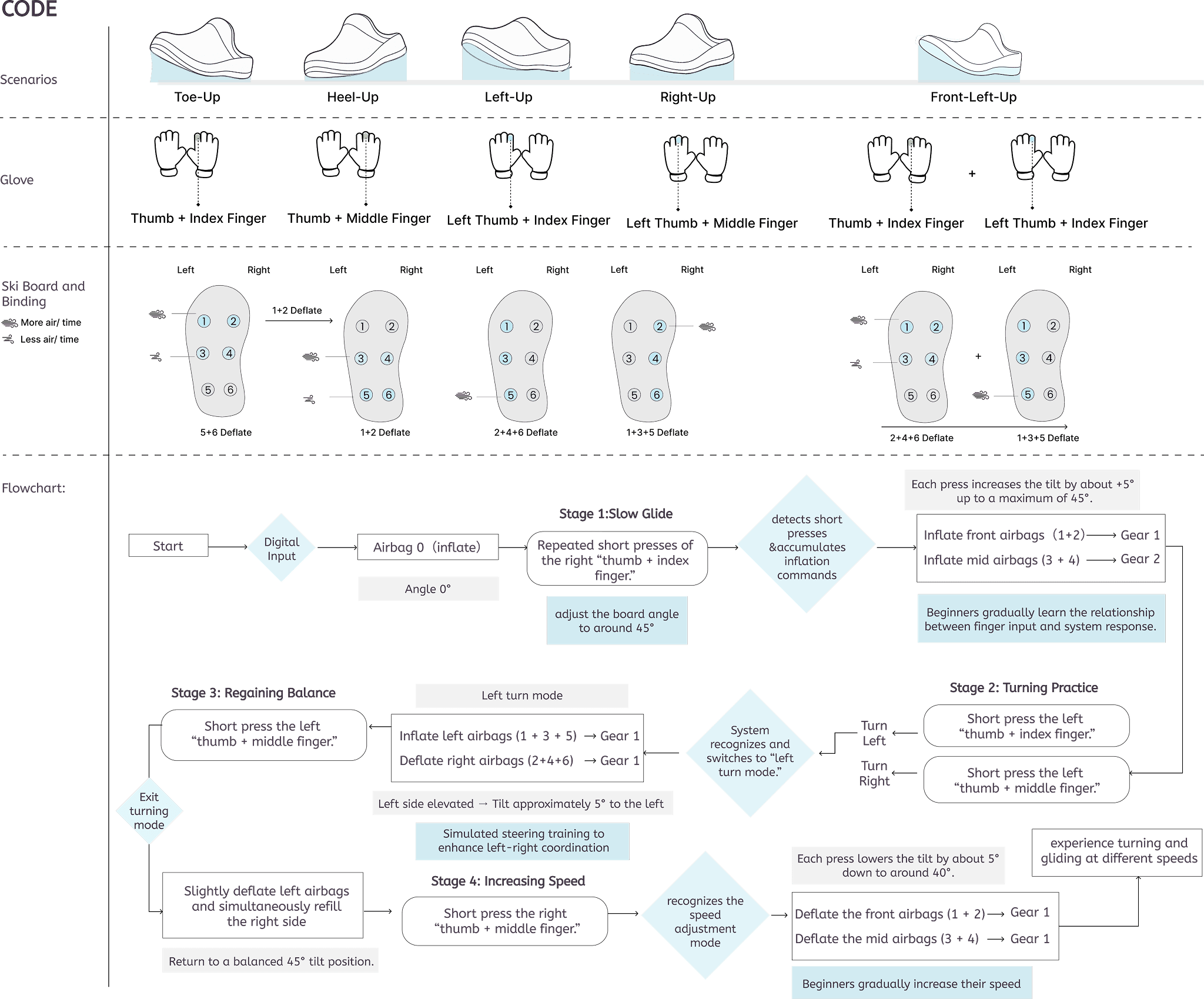
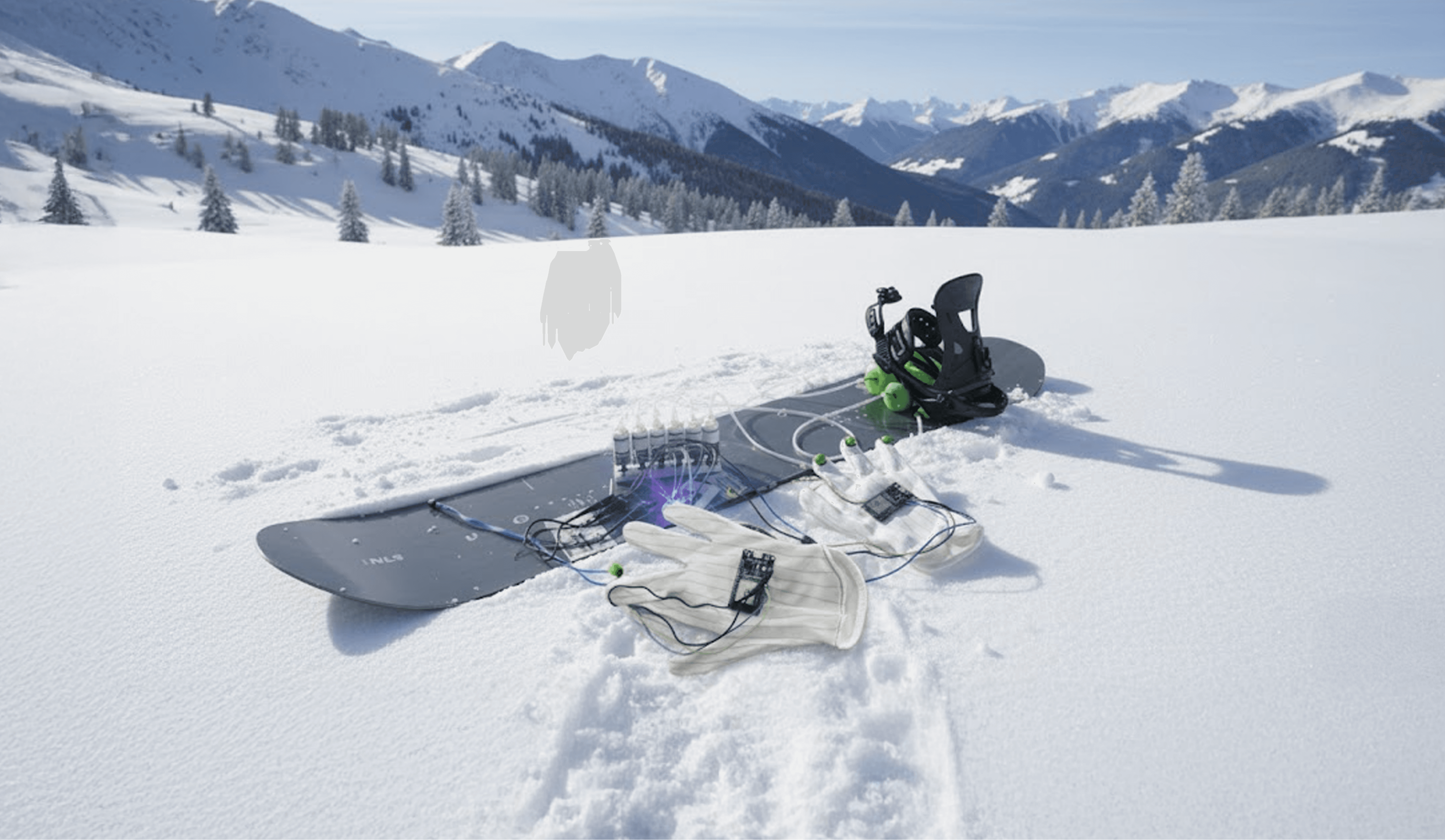
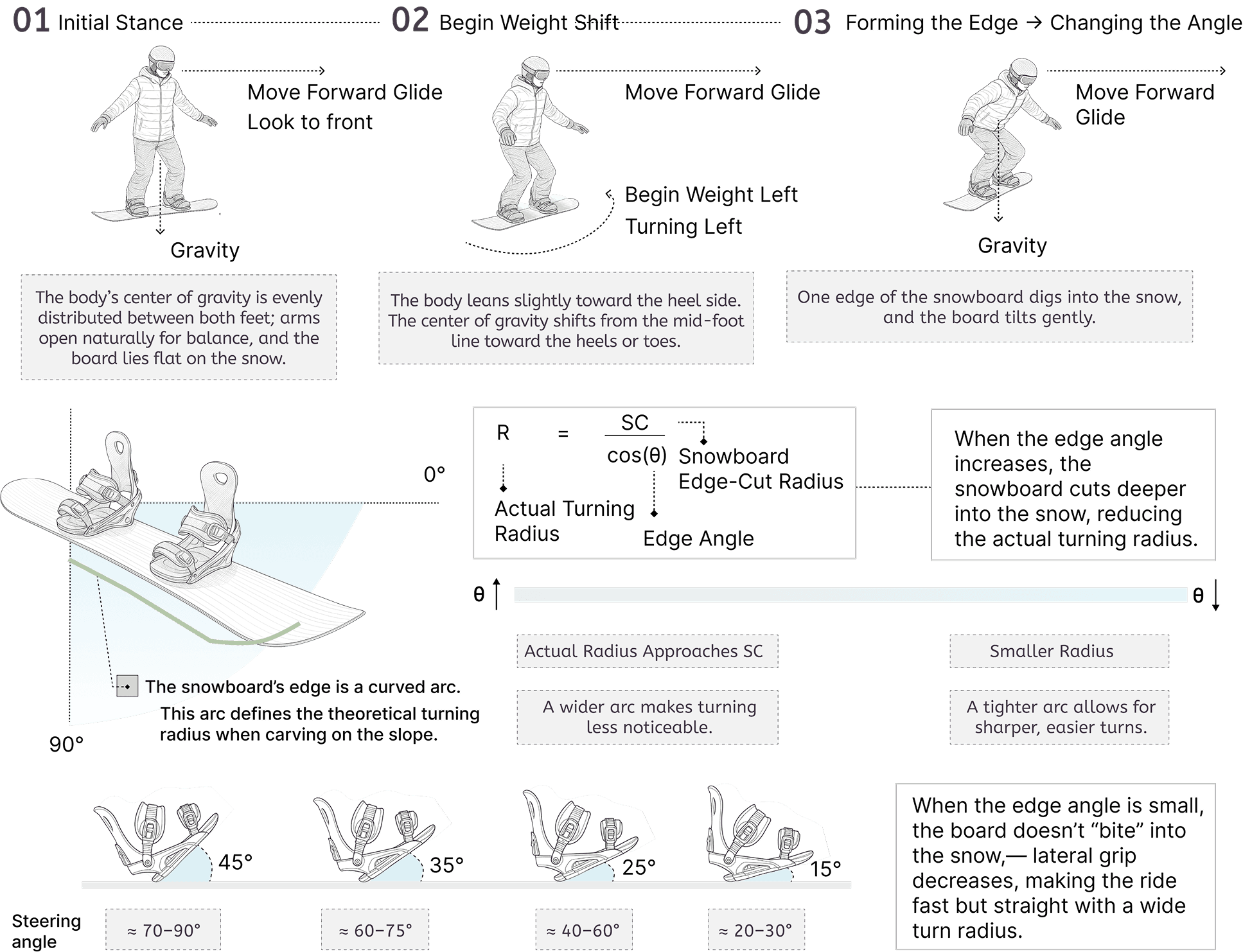
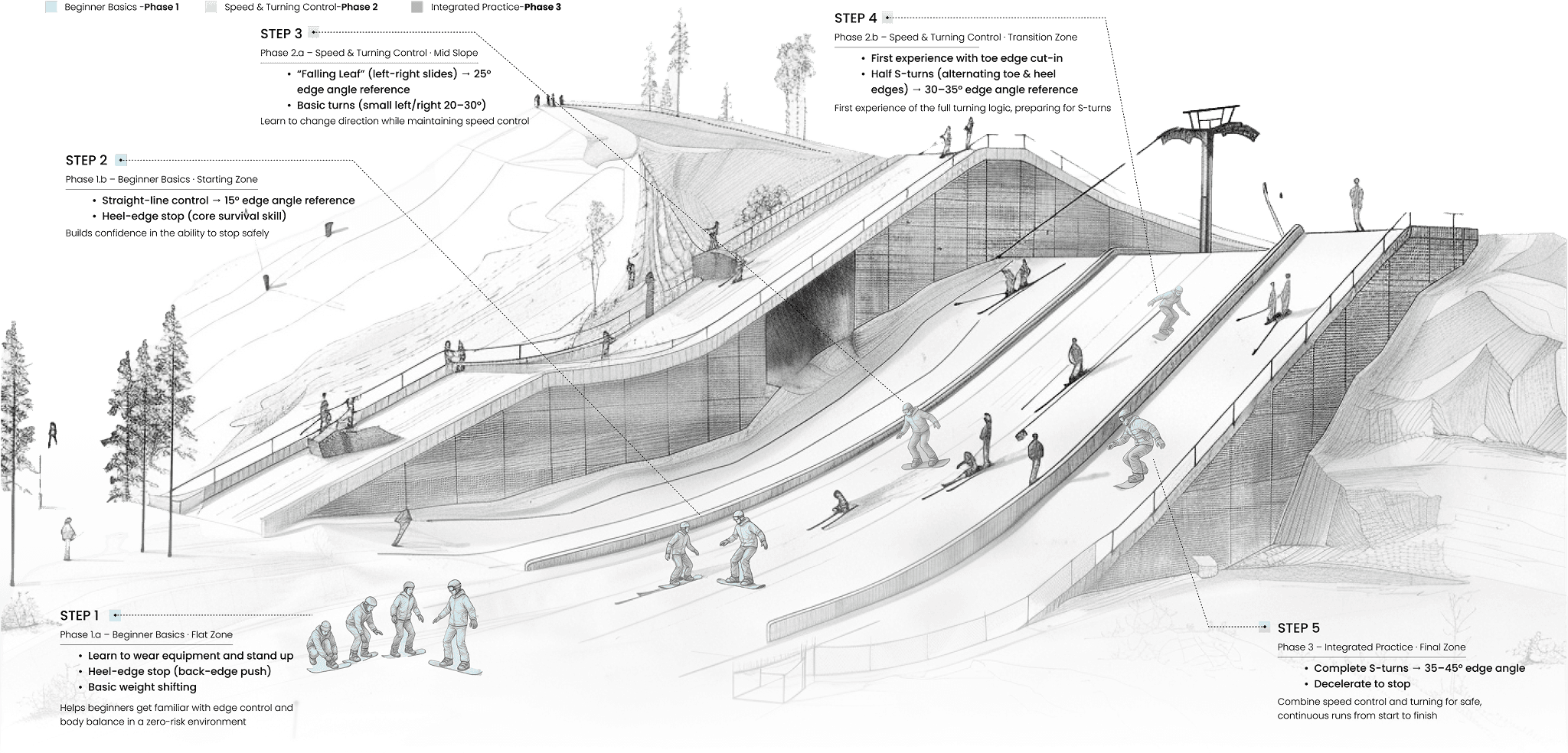
The Adaptive Snowboard Assist System reimagines how beginners learn snowboarding by transforming fear into feedback and uncertainty into control. Through a combination of a variable-angle board base and wearable gesture input, the system provides real-time physical assistance and intuitive guidance—much like a coach who is always by your side. By helping riders feel the relationship between edge angle, balance, and speed, the system supports beginners through their most vulnerable learning phase, gradually reducing intervention as confidence grows, and empowering them to ride independently with safety and trust.
problem
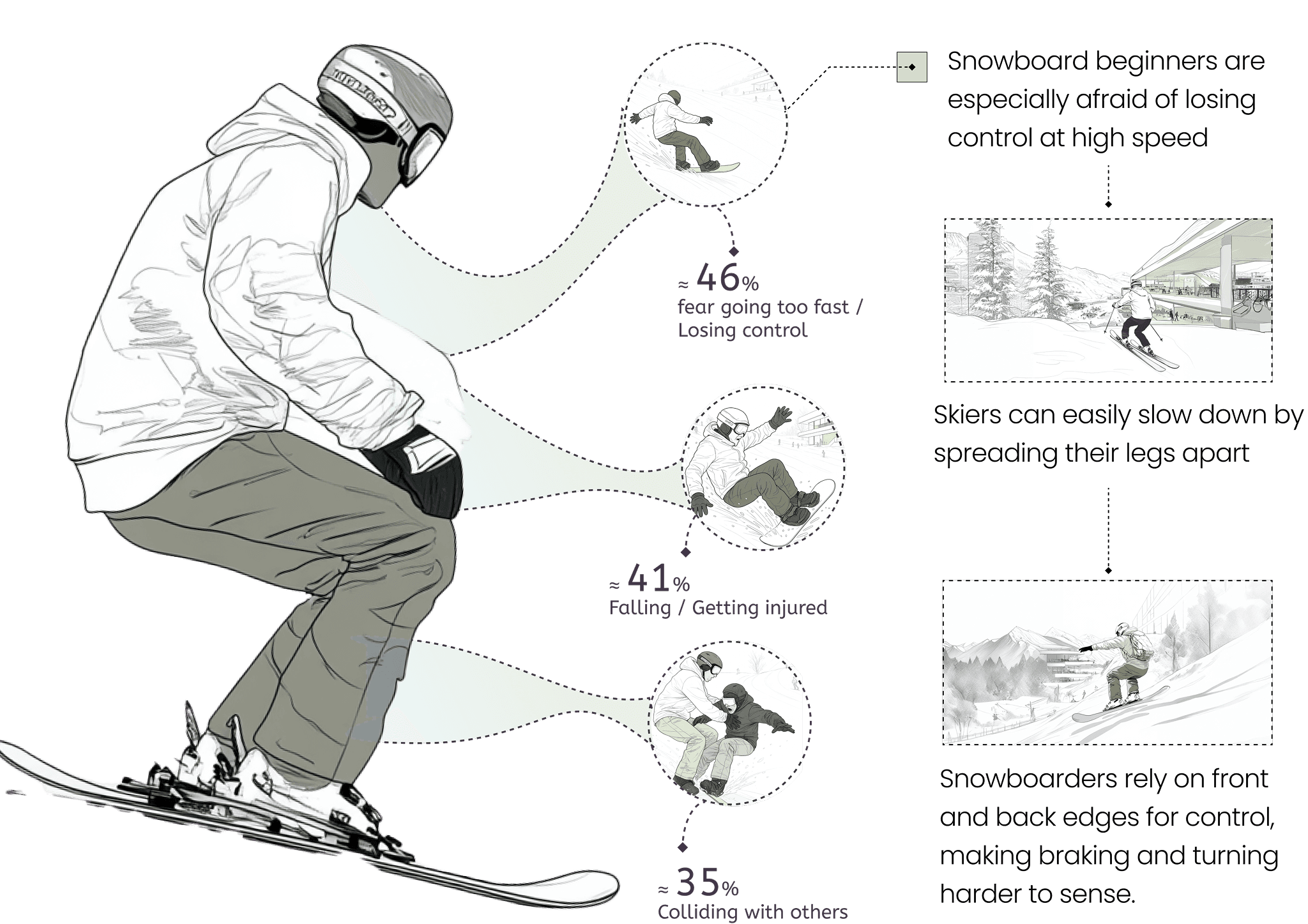
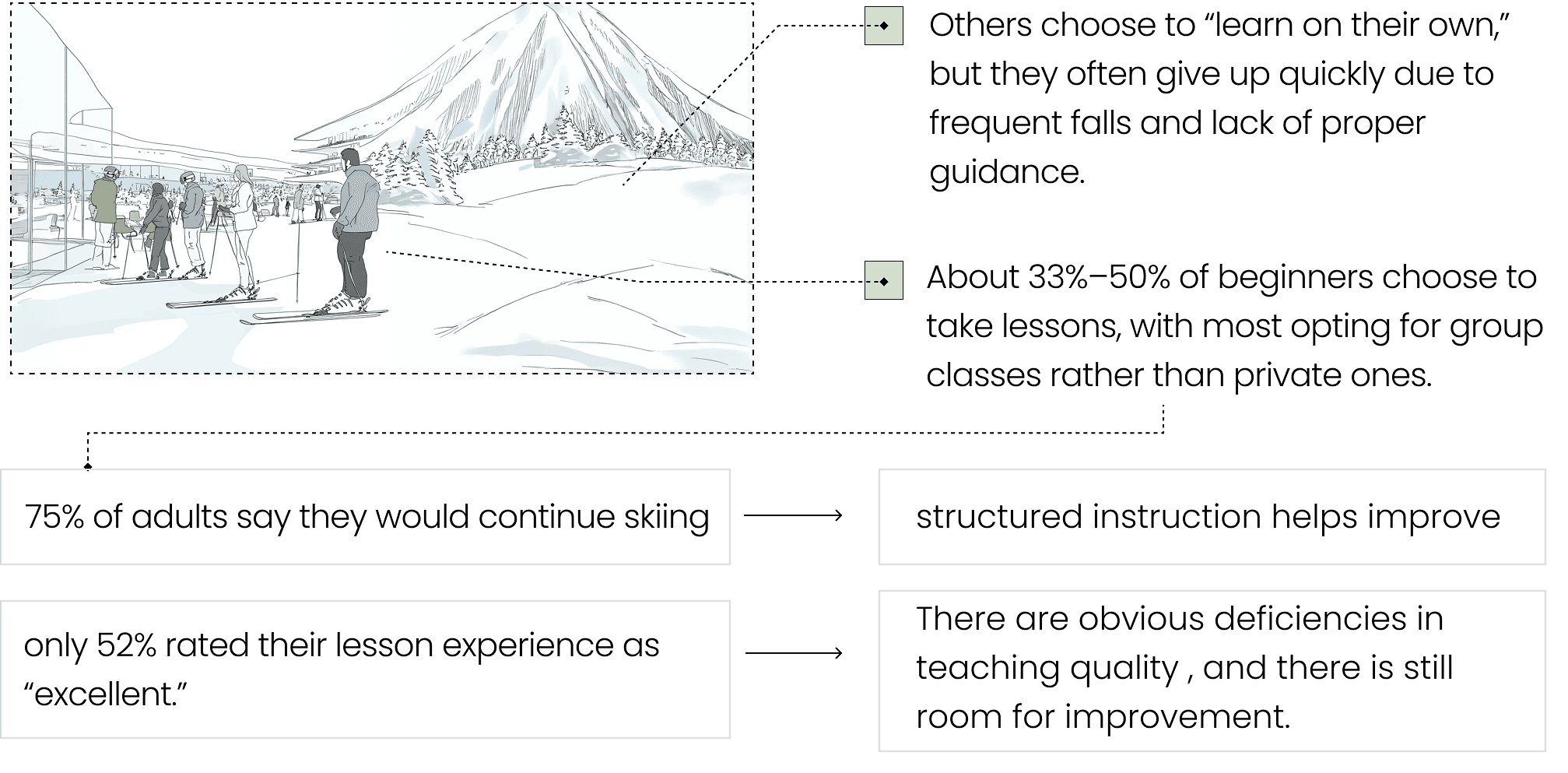
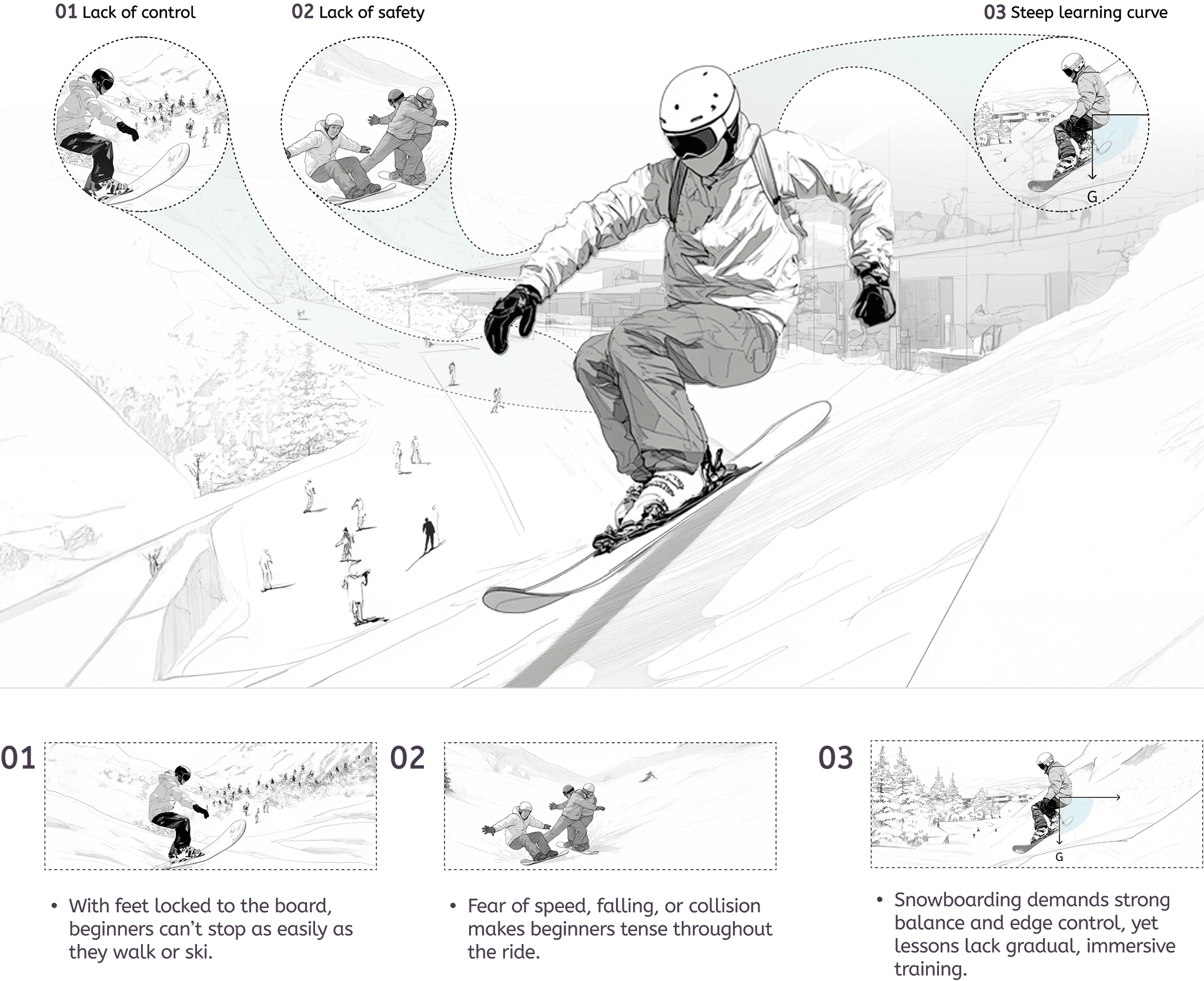
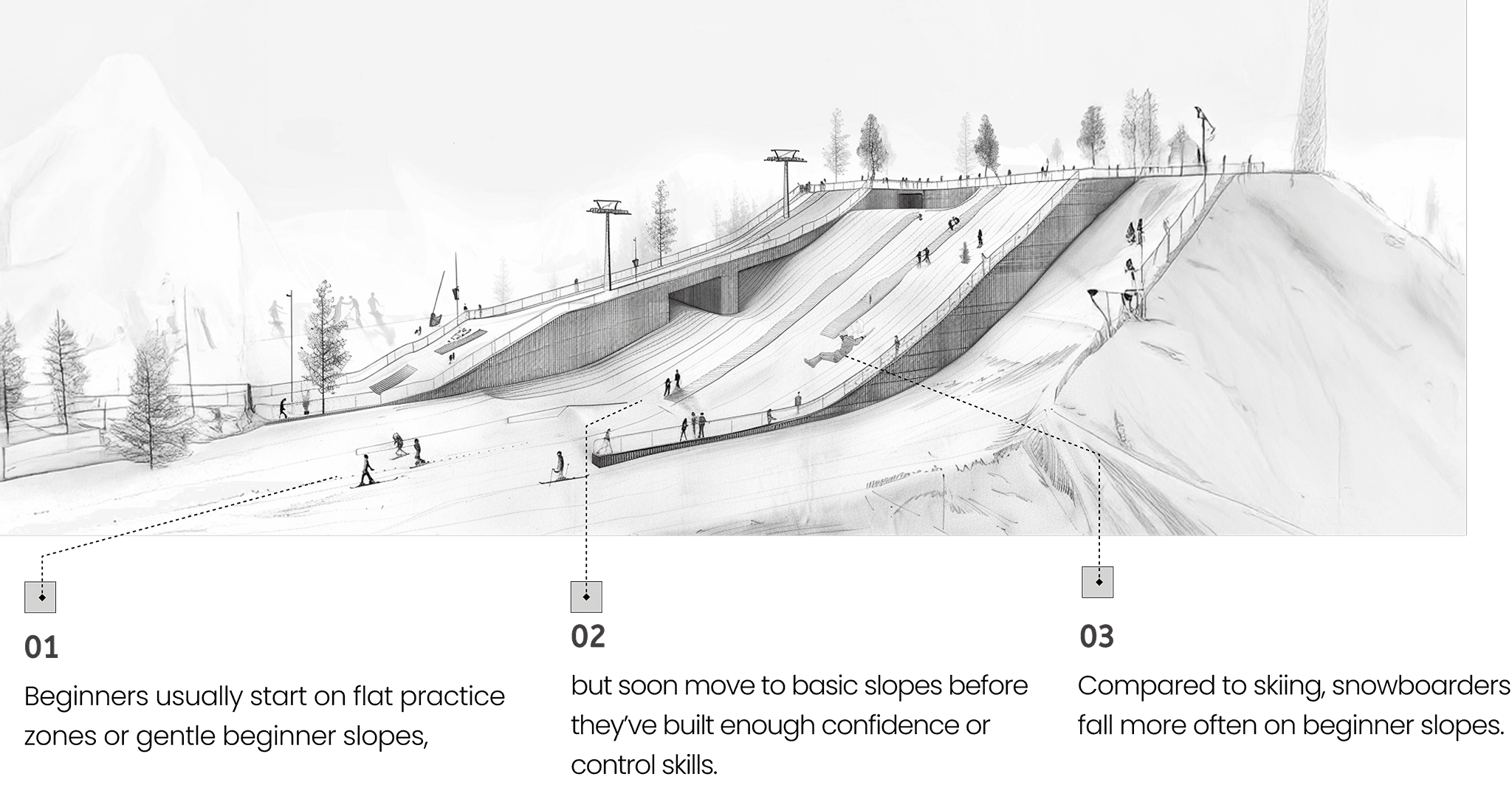
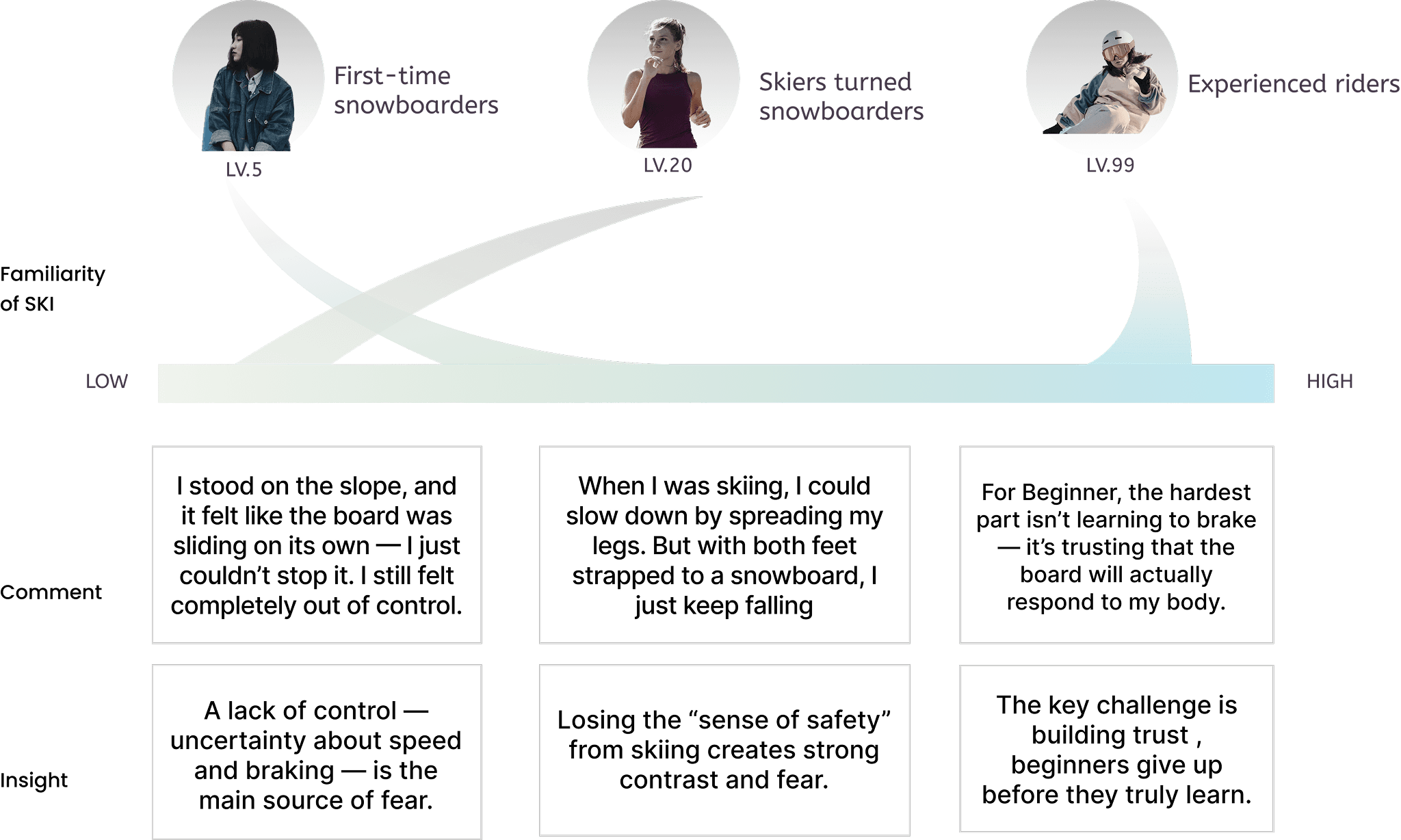
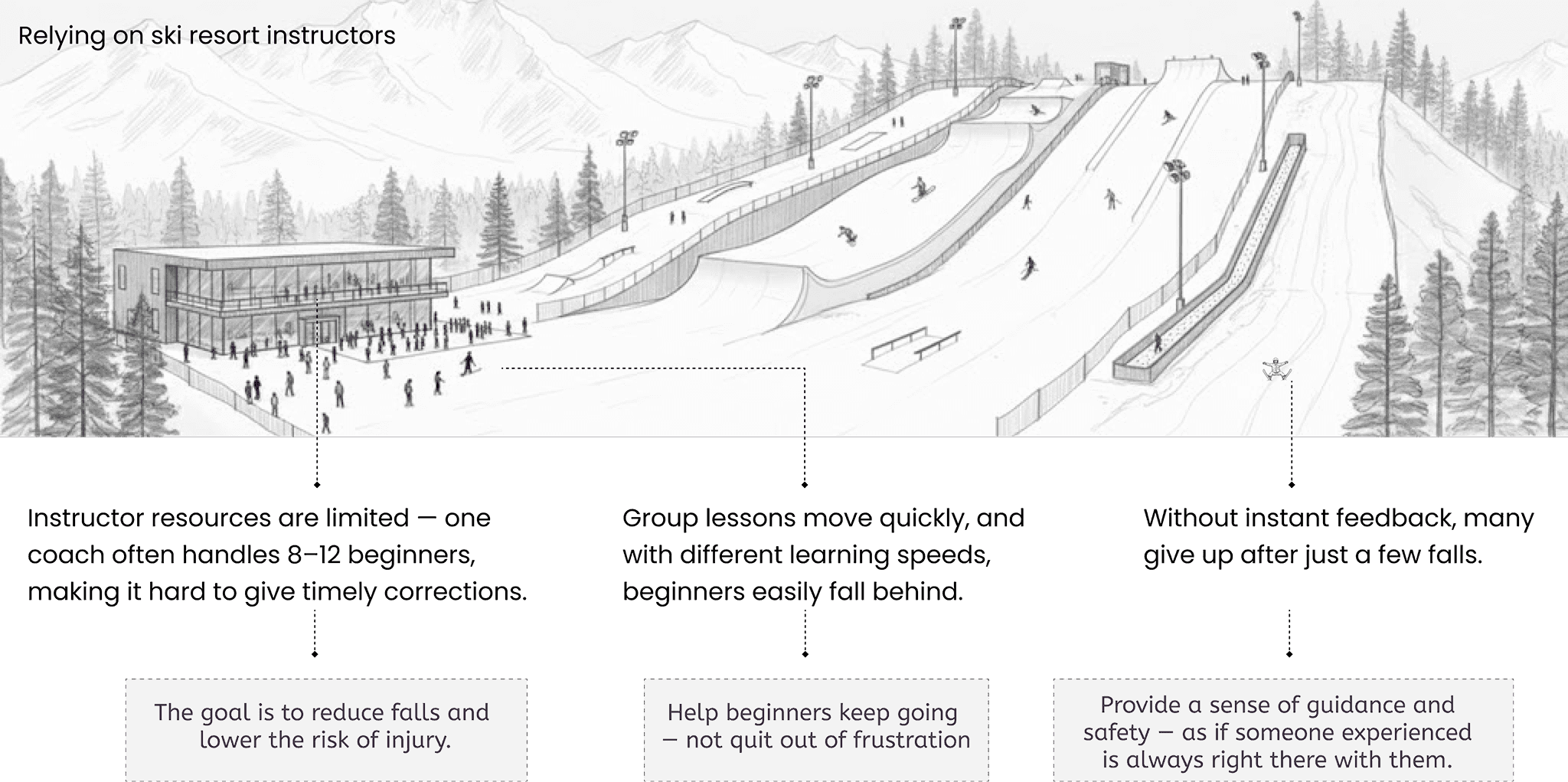
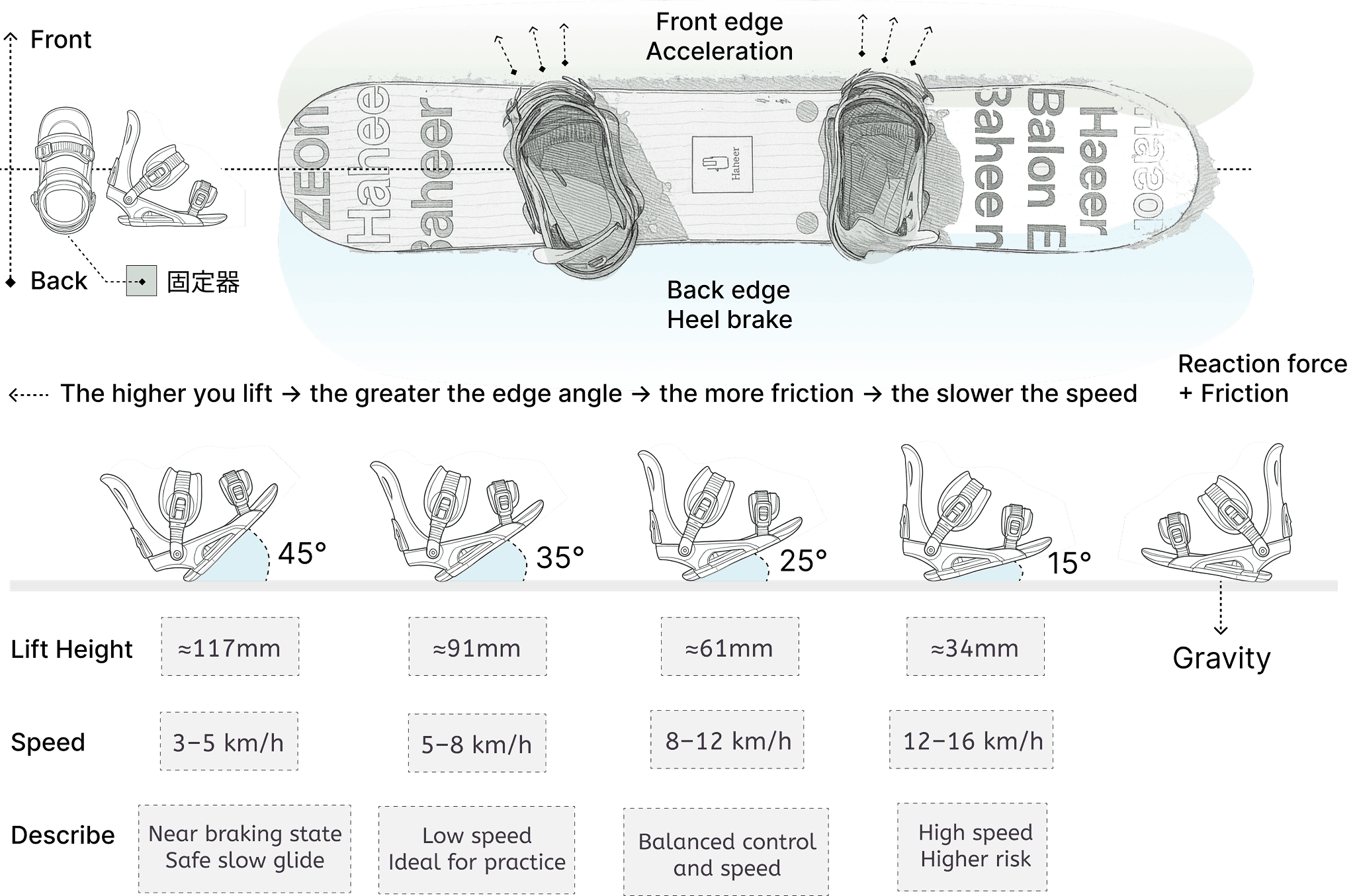
Beginner snowboarders often give up due to fear of losing control, caused by unstable balance, unclear speed feedback, and the lack of continuous, personalized guidance during early learning stages.
solution
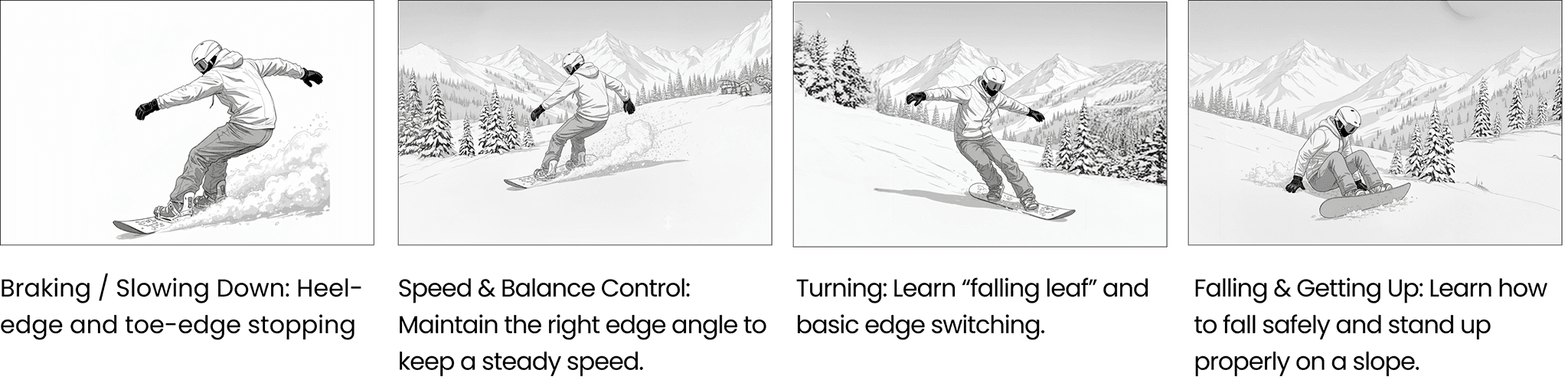
Design an adaptive snowboarding assist system that provides real-time, intuitive feedback on balance and speed, helping beginners build confidence, reduce fear, and learn safely through progressive, self-guided practice.
How might we support beginner snowboarders with real-time, intuitive guidance that reduces fear, builds trust in body control, and enables safe, self-paced learning without constant instructor supervision?
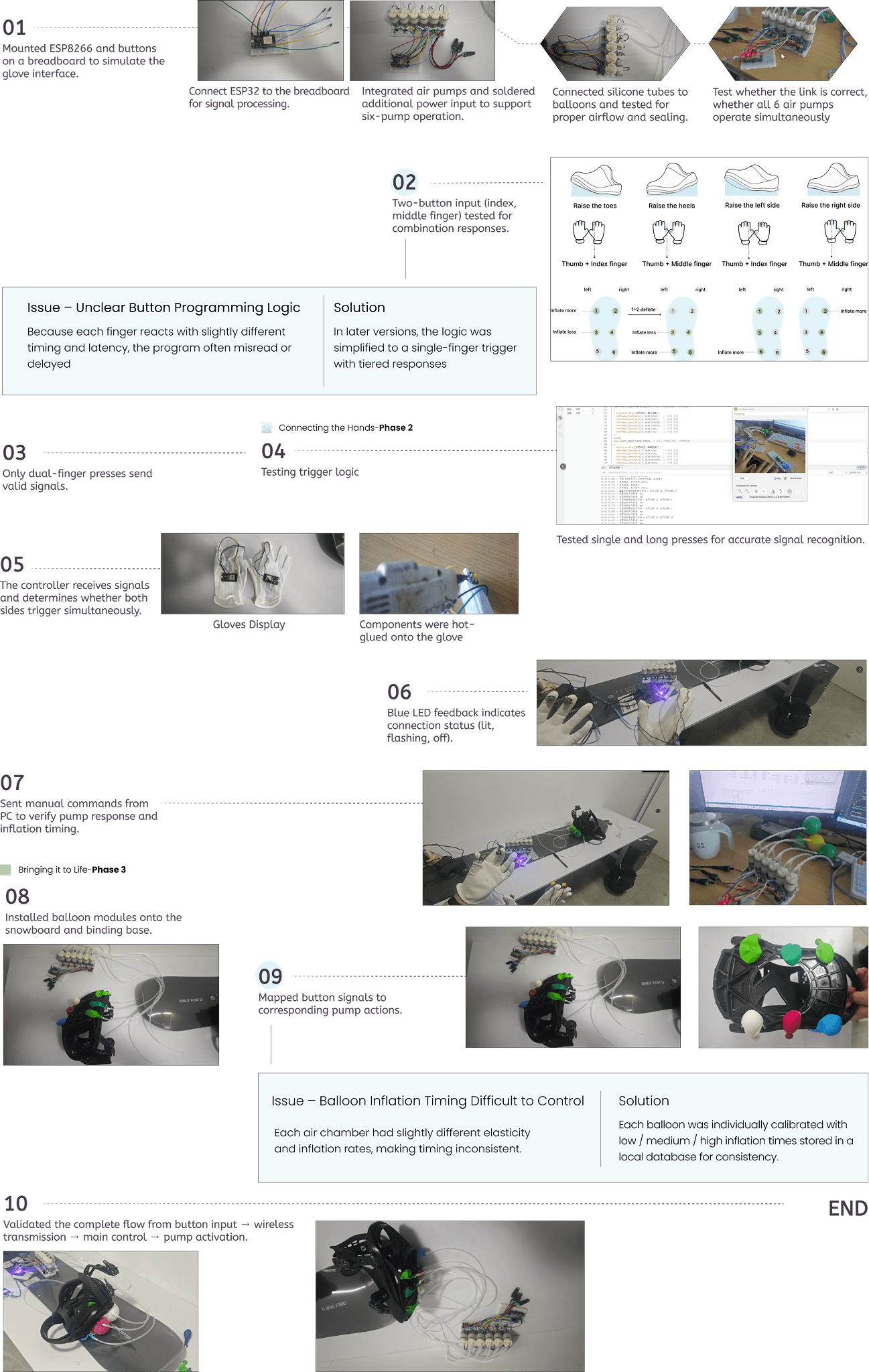
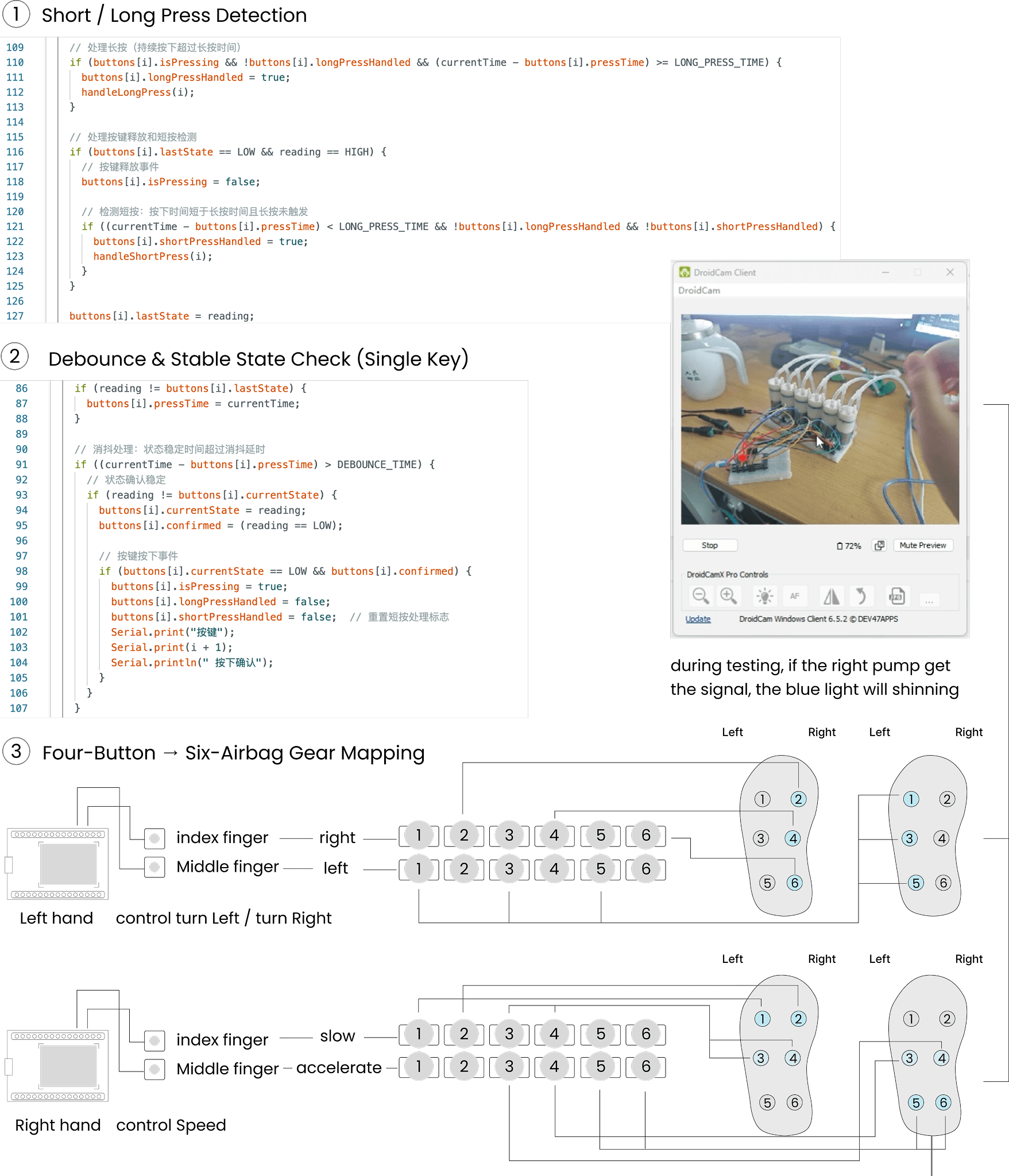
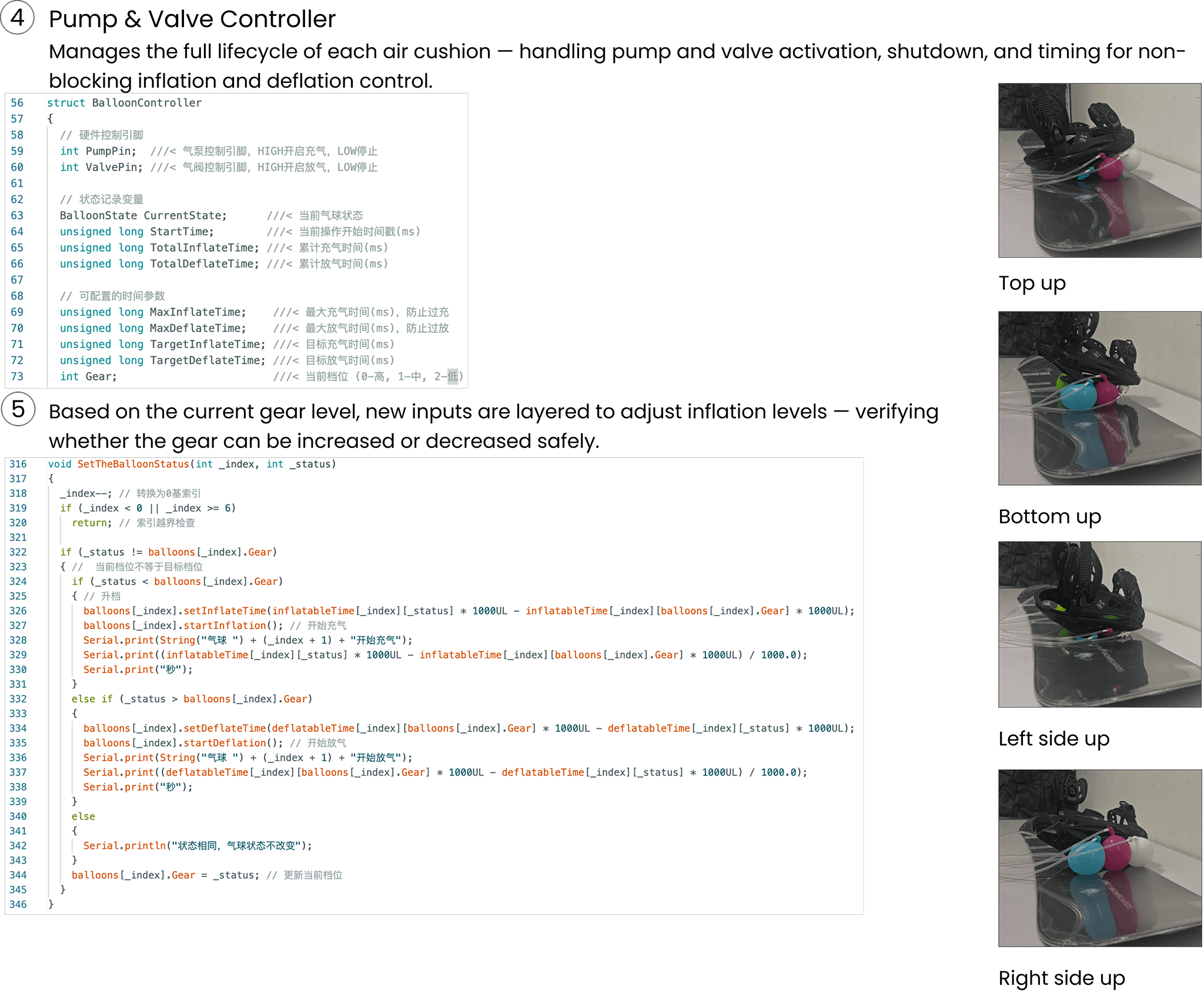
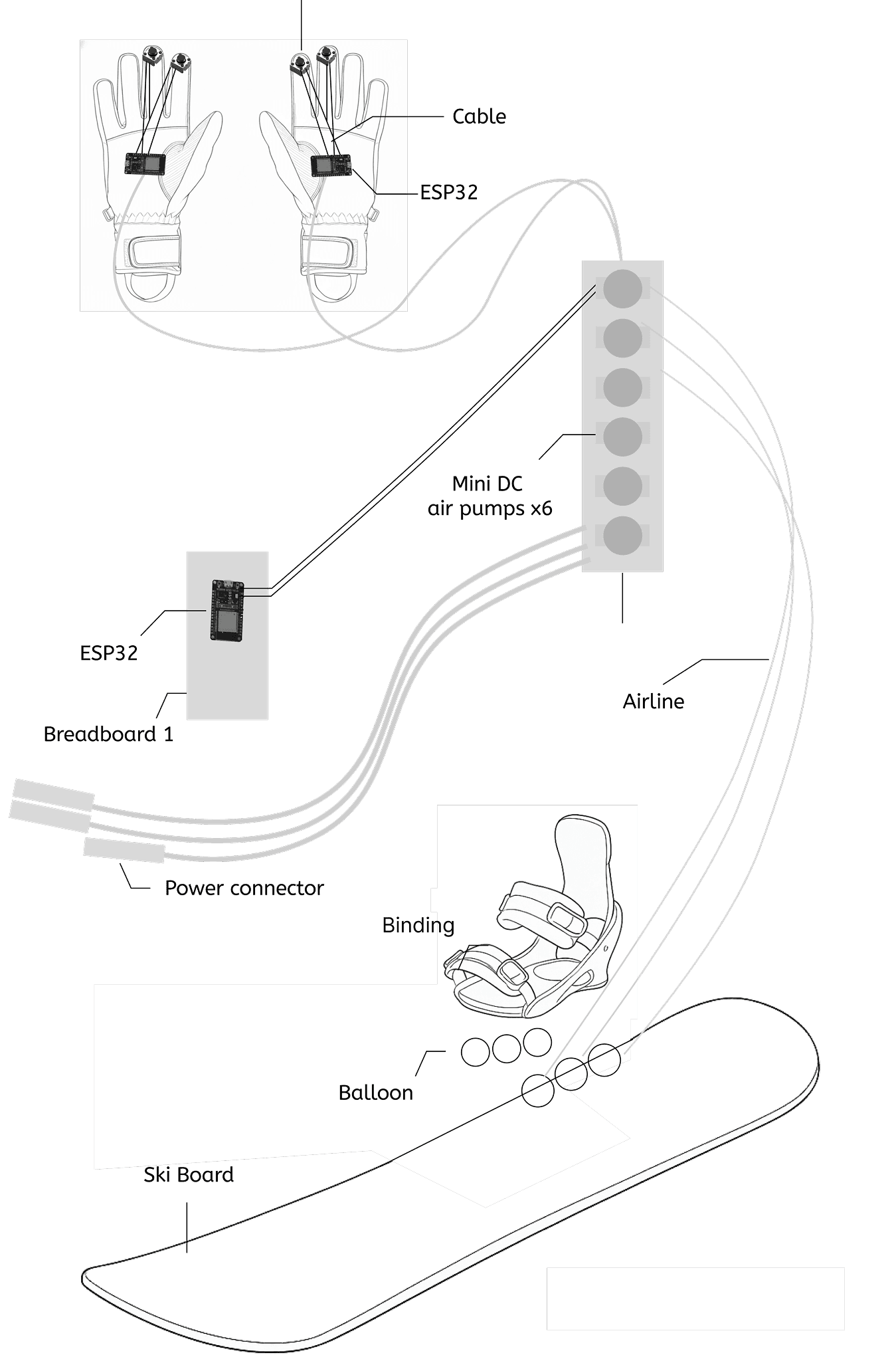
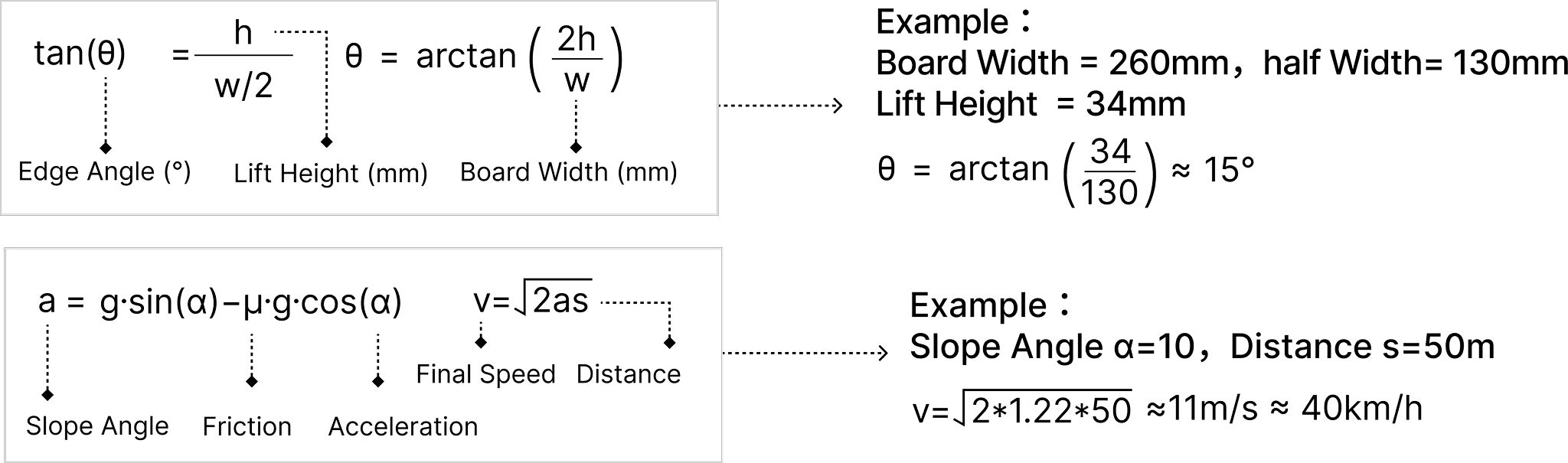
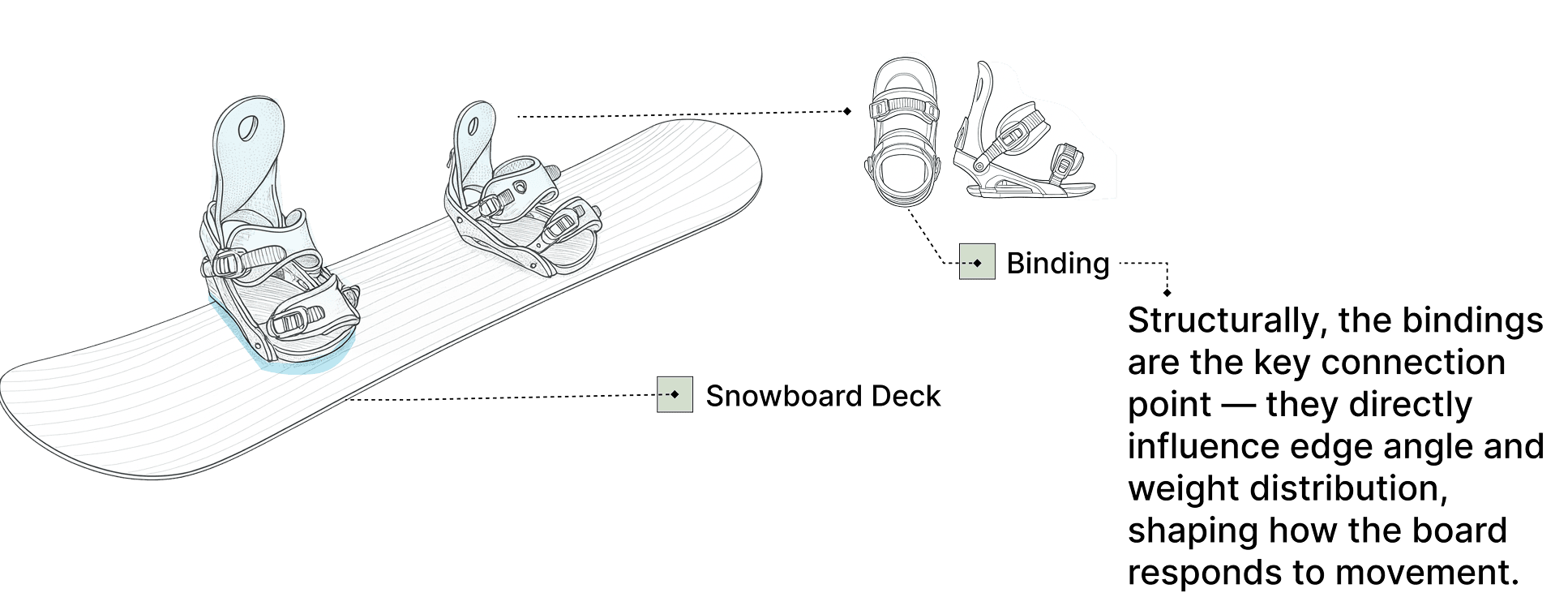
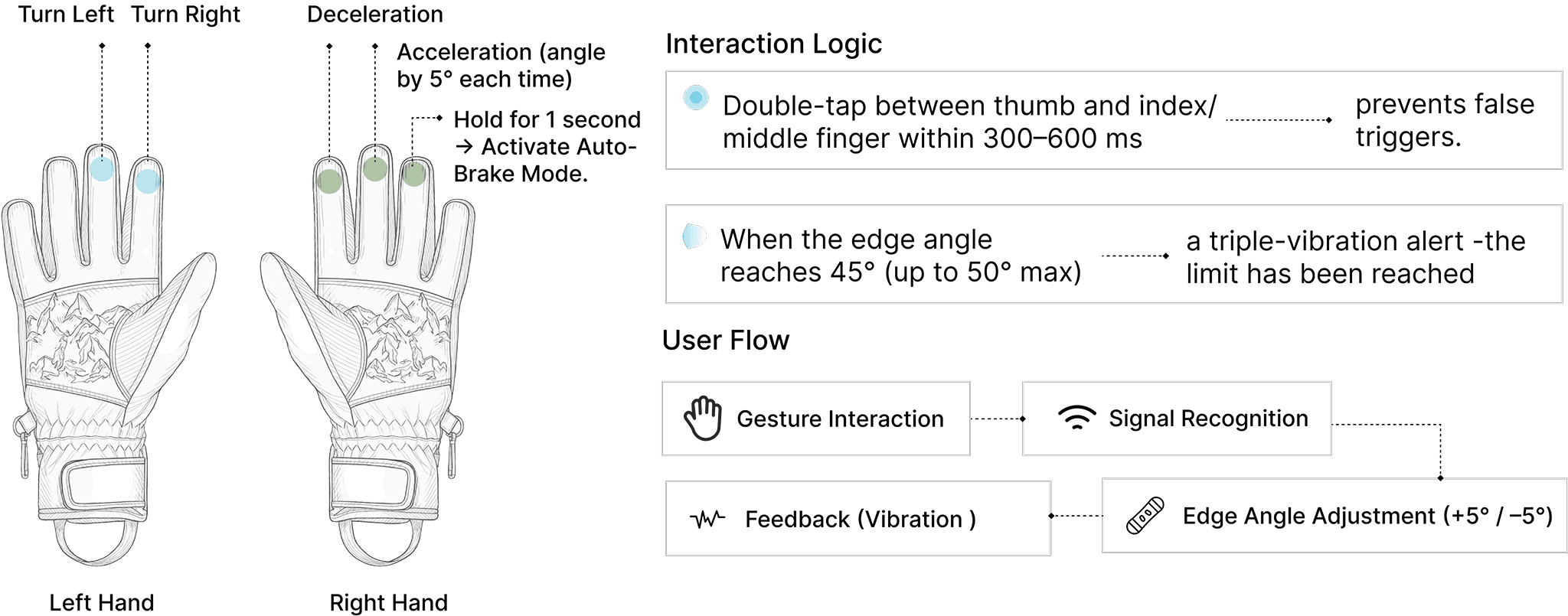
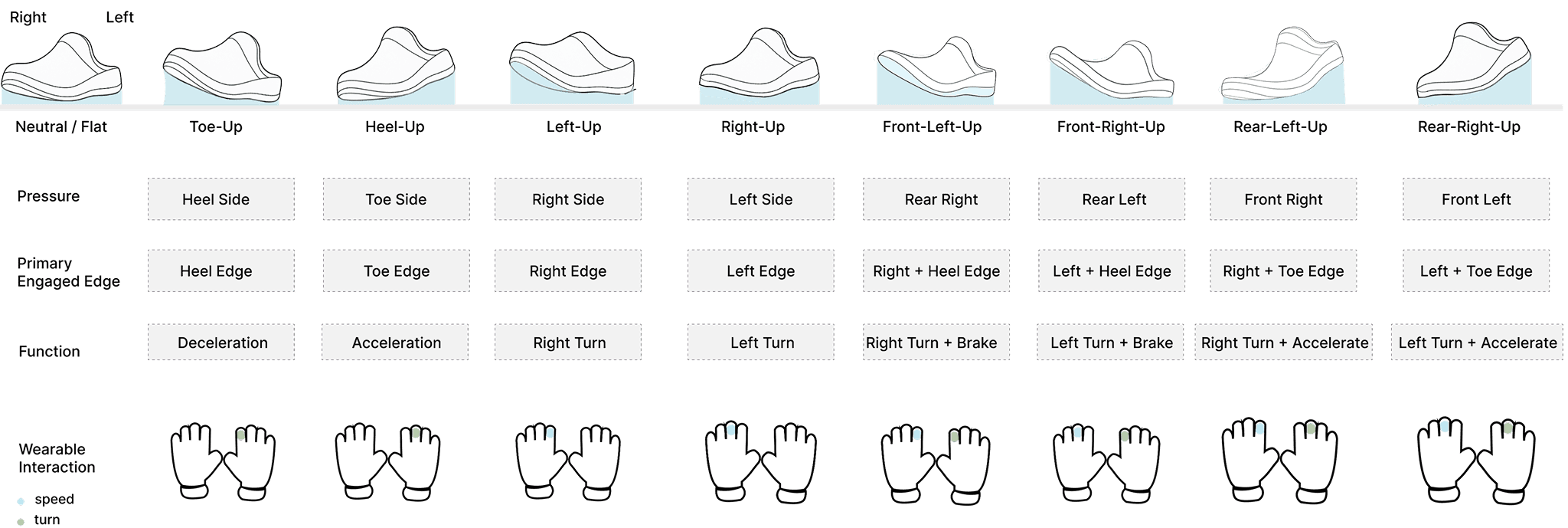
This project explores how gesture interaction can support snowboard training and postural control. By integrating pneumatic air bladders beneath the bindings and sensor-embedded gloves as gesture input devices, the system enables real-time balance adjustment through air pressure modulation. Riders can intuitively control edge tilt, toe and heel balance, or stability levels via hand gestures. Designed for beginners and rehabilitation scenarios, the setup simulates on-slope feedback without external instructors—bridging the gap between physical motion learning and human–machine adaptive response.
year
2024
timeframe
3 month
tools
Haptic Gesture Input | Human–Machine Balance|Arduino
category
Personal Project
01 RESEARCH
02 Research

03 IDEATION

04 DESIGN